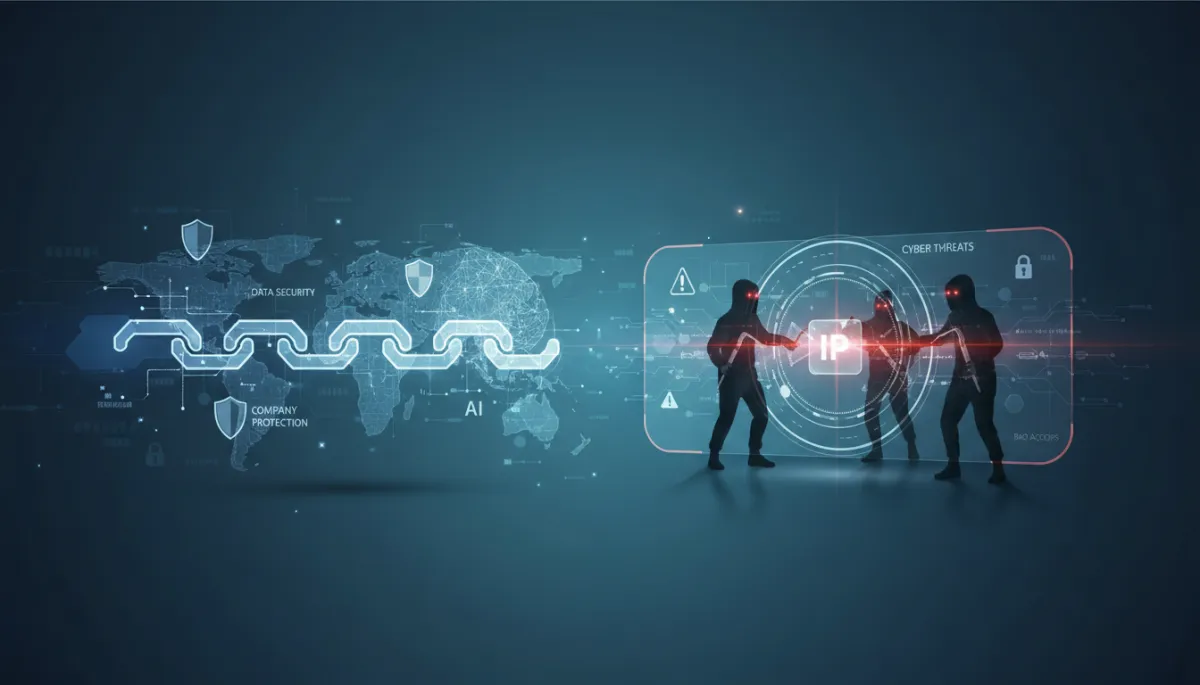
AI in Supply Chain: Boost Performance, Ensure Security
Supply Chain, Data Security, Risk Management, AI supplychain
Why Use AI in the Supply Chain? Performance Without Sacrificing Security
Modern supply chains are under pressure to move faster, cost less, and adapt quickly—while staying safe from cyber threats and protecting valuable Intellectual Property. AI is emerging as a powerful ally, but many leaders still ask: can we embrace AI supplychain innovation without opening the door to bad actors or risking sensitive data?
Why Use AI in the Supply Chain Today?
Supply chain operations generate massive amounts of data—from purchase orders and inventory levels to shipment tracking and supplier performance. Traditional tools struggle to turn this volume into timely, actionable insight. AI, however, thrives on complexity and scale. Agentic AI is excellent at reviewing, scanning, evaluating, especially on topics of risk. It can forecast demand, optimize routes, flag bottlenecks, and recommend smarter inventory levels in near real time.
For professionals responsible for service levels and margins, AI becomes a decision accelerator. Instead of reacting to problems after they hit customers, AI supplychain solutions help teams anticipate disruptions—from weather events to supplier delays—and respond before they impact the business. The result is higher performance: better on-time delivery, reduced stockouts, and leaner working capital tied up in inventory.
Improving Performance While Maintaining Data Security
Performance gains mean little if they come at the expense of Data Security. Supply chains often hold sensitive information: pricing agreements, supplier terms, product specifications, and even customer data. Any AI initiative must be built on a foundation of strong security controls and clear governance.
Modern AI platforms can be configured to respect existing access controls, encrypt data in transit and at rest, and keep sensitive datasets within secure environments. Role-based access ensures that planners, analysts, and partners only see what they are authorized to see. When combined with rigorous monitoring and audit trails, AI becomes part of a broader Company Protection strategy—not a loophole that weakens it.

Secure AI dashboards give supply chain teams insight without exposing sensitive data.
Protecting Company IP and Sensitive Know-How
Supply chains are rich with Intellectual Property: unique planning rules, proprietary formulas, sourcing strategies, and custom processes that create competitive advantage. When deploying AI, organizations must ensure this company IP is not inadvertently exposed through third-party tools, shared training datasets, or poorly controlled integrations.
A well-designed AI supplychain program keeps models and training data within controlled environments, applies strict data minimization, and separates confidential logic from external interfaces. Contracts with technology partners should clearly state ownership of models and outputs, preventing vendors from reusing your hard-won insights to benefit competitors. In this way, AI becomes a way to codify and scale your best practices—without giving away the playbook.
Managing Risk from Cyber Threats and Bad Actors
As supply chains become more digital, they also become more tempting targets. Cyber Threats can disrupt operations, corrupt planning data, or expose sensitive information. Bad Actors may attempt phishing attacks on professionals, inject false data into systems, or exploit weak partner connections to gain access. 60 percent of small business caught up in a cyber attack will not survive it. Your processes need to screen and manage this for all your critical suppliers. Your strategies must be proactive.
AI can actually strengthen Risk Management. Anomaly detection models can flag unusual orders, suspicious access patterns, or unexpected changes in master data. Intelligent monitoring can detect when a user’s behavior deviates from their normal pattern, prompting additional verification before critical actions are taken. Combined with strong identity management and multi-factor authentication, AI helps professionals stay ahead of bad actors, rather than reacting after damage is done.
Building a Secure, High-Performance AI supplychain
The path forward is not choosing between efficiency and security. It is designing AI initiatives that embed Data Security, Company Protection, and Risk Management from day one. For supply chain leaders, this means partnering closely with IT and security teams, selecting platforms with robust controls, and training professionals and partners to use AI responsibly.
When done well, AI transforms operations: faster decisions, fewer disruptions, and smarter use of working capital—while keeping Intellectual Property safe and bad actors at bay. The organizations that master this balance will set the standard for the next generation of resilient, secure, and intelligent supply chains.
If you are ready, we have a clean assessment survey you will want to check out to see how your team stacks up. And if you are already on a path to implementation, my new book may be useful for you. Supply Chain + AI, The Boardroom Playbook Ai Advantage.