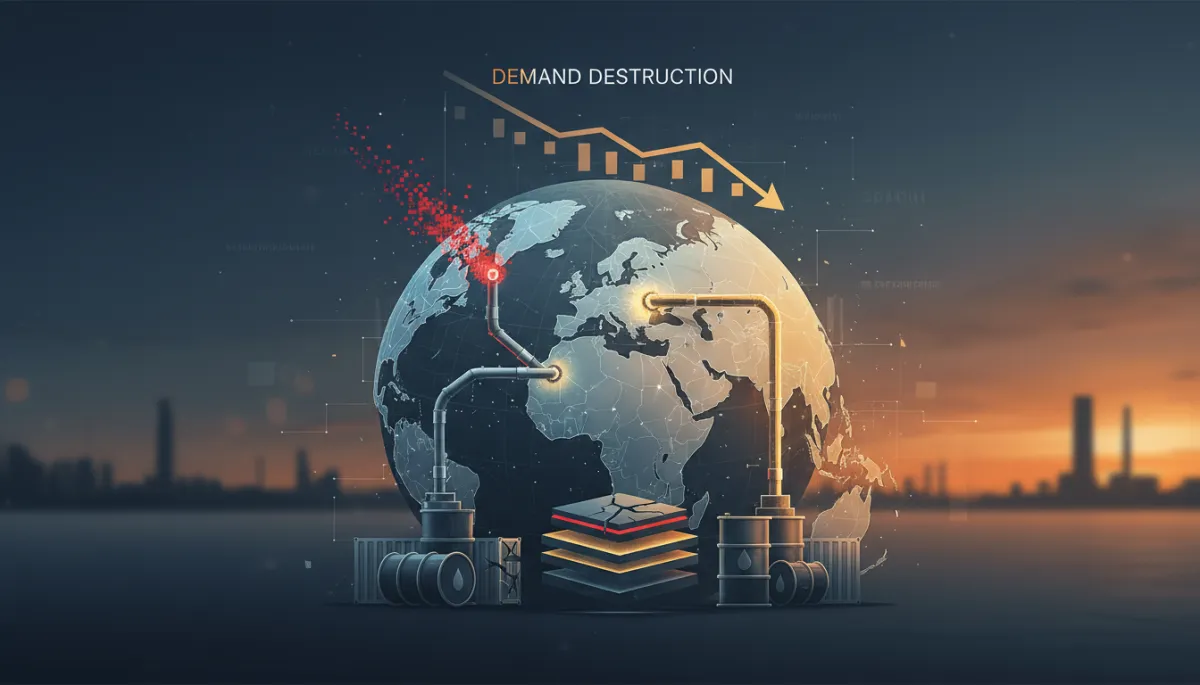
Saudi Oil Cuts and Global Energy Risk
Energy Markets, Global Supply Chains, Oil Prices
Demand Destruction, Saudi Oil Cuts, and the New Map of Global Energy Risk
Saudi Arabia’s sudden disruption of oil deliveries to Europe in September 2026 has rattled global markets, sharpened fears of demand destruction, and raised a critical question for businesses and policymakers alike: if Europe can be cut off this quickly, is Asia next?
The September Shock: What Changed as of September 21, 2026
The latest wave of disruption began on 10–11 September 2026, when drone attacks damaged Saudi Arabia’s East–West Pipeline—also known as the Petroline—forcing a shutdown of one of the world’s most strategically important pieces of energy infrastructure. The 1,200‑kilometre pipeline normally carries up to 4–7 million barrels per day from the kingdom’s eastern fields to the Red Sea port of Yanbu, providing a vital bypass around the vulnerable Strait of Hormuz (Oilprice, Al Jazeera).
Within days, Saudi Aramco cancelled or postponed multiple crude cargoes scheduled for loading at Yanbu. At least three European refiners lost their late‑September shipments, with others warned to expect missed barrels. Reuters reporting indicated that oil loadings at Yanbu were effectively suspended, and by mid‑month at least two European refiners had been told to expect zero crude deliveries under term contracts in October (Oilprice, Internazionale, bdnews24).
This is not a marginal adjustment. OECD Europe had been importing roughly 577,000 barrels per day of Saudi crude as recently as June 2026 (IEA). The pipeline outage and cancelled cargoes represent a sharp, sudden removal of a key supply stream just as global markets were already tight from earlier disruptions in the Strait of Hormuz and Bab al‑Mandab (Le Monde, EIA).
Why the East–West Pipeline Matters So Much
The East–West Pipeline is more than a piece of steel in the desert; it is a strategic pressure valve for the global economy. By connecting Saudi Arabia’s eastern oilfields directly to the Red Sea, it allows crude to reach Europe and parts of Asia without transiting the Strait of Hormuz, a narrow channel through which roughly a fifth of the world’s oil normally flows (EIA).
When the Petroline is operating, Riyadh can:
Diversify export routes, reducing exposure to any single chokepoint such as Hormuz or Bab al‑Mandab.
Respond flexibly to demand from European and Mediterranean refiners via Yanbu and the SUMED pipeline system through Egypt’s Sidi Kerir and Ain Sukhna terminals.
Signal market stability by assuring buyers that Saudi barrels can still reach the market even during Gulf tensions.
Its shutdown, therefore, is not merely a logistical hiccup. It removes a key redundancy from the global system, concentrates risk back onto already‑strained sea lanes, and undermines confidence in the reliability of Saudi supply at a time when the kingdom’s overall production has already fallen to its lowest level since 1990—around 6.24 million barrels per day in August 2026 (Al‑Monitor).
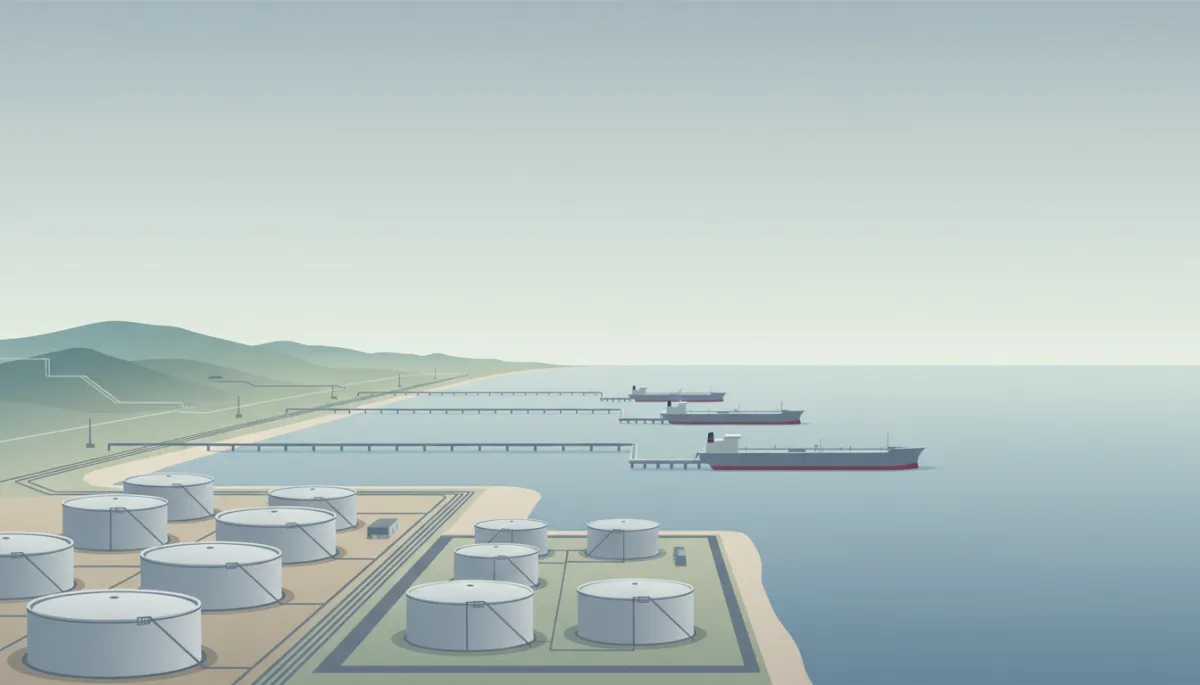
When one major export hub goes offline, pressure intensifies on every remaining route.
From Supply Shock to Demand Destruction: Price Spikes and Economic Strain
Markets reacted swiftly. In the days following the pipeline shutdown, Brent crude surged toward $108–110 per barrel, with West Texas Intermediate (WTI) following close behind (The National). This came on top of an already elevated backdrop: Brent had averaged $91 in August, up $7 from July, as Middle East export constraints tightened supplies (EIA).
By 17–18 September, prices eased slightly—Brent sliding back to around $104–105 and WTI to just above $100—as reports emerged that Saudi Arabia was restoring partial export capacity via alternative routes, including shipments through Oman (Kitco). By 21 September, Brent was hovering near $103, still far above earlier‑year levels (Gulf News).
For households, transport companies, airlines, and energy‑intensive manufacturers, these price levels are not abstract. They translate into higher fuel and input costs, tighter margins, and ultimately weaker consumption and investment. This is where the concept of demand destruction comes in: when prices stay high for long enough, consumers and businesses respond by driving less, flying less, cutting production, or accelerating the shift to alternatives such as electrification and efficiency upgrades. The result is not just slower oil demand growth—it can be an outright decline in demand in certain regions and sectors, with knock‑on effects for global GDP.
Europe Feels the Pinch First—but Asia Is Watching Closely
In the immediate term, Europe is bearing the brunt of the disruption. With Yanbu offline and East–West flows halted, Saudi crude shipments to Europe via the Red Sea have largely stopped. Some volumes continued earlier in the month through the SUMED corridor—from Ain Sukhna across Egypt to Sidi Kerir on the Mediterranean—amounting to roughly 1.95 million barrels per day through Sidi Kerir and 1.40 million through Ain Sukhna in early September (Oilprice). But these flows are not exclusively Saudi and are insufficient to fully offset the loss of Yanbu‑linked cargoes.
European refiners now face a scramble to secure alternative grades from West Africa, the U.S. Gulf Coast, and the North Sea, often at a premium and with longer shipping times. For policymakers, the episode reinforces a hard lesson: reducing dependence on Russian crude has not eliminated vulnerability; it has simply shifted it toward other suppliers and routes.
Asia, however, is not immune. As Europe bids more aggressively for non‑Saudi barrels, competition intensifies for flexible supplies that also feed Asian refineries. The question many in the region are asking is whether Riyadh, in trying to preserve key Asian relationships, will shield Asian buyers from cuts—or whether a prolonged outage and political pressure could eventually force reductions there as well.
Alternative Export Routes to Asia: What Exists Today
For Asian importers, Saudi barrels are only one part of a broader supply mosaic. As of late 2026, several key routes help feed Asia’s energy demand:
Russia’s ESPO pipeline – The Eastern Siberia–Pacific Ocean (ESPO) pipeline delivers crude directly from Russia’s fields to China and to the Pacific coast for shipment to other Asian buyers. This route has become increasingly central since 2022 (Reuters).
Central Asia–China pipelines – Kazakhstan and Turkmenistan have expanded pipeline and port capacity to send more crude eastward, with China as the anchor buyer (Oil & Gas Middle East).
Middle East seaborne flows – Despite the current turbulence, the traditional tanker routes from the Gulf to Asian ports via the Strait of Hormuz remain the backbone of Asia’s oil supply, supplemented by UAE and Saudi investments in pipelines that partially bypass Hormuz (Bloomberg).
North American and African routes – Canada’s Pacific‑facing export projects, U.S. Gulf Coast shipments, and increased volumes from Nigeria and Angola offer additional, if more costly and distant, options for Asian refiners.
In the short term, Saudi Arabia has also used Oman and other Gulf ports to redirect some crude, helping lift its exports back above 4 million barrels per day in September after a slump to 2.4 million in August (Gulf News). But these workarounds are constrained by infrastructure capacity and geopolitical risk.
Vulnerabilities in the New Routing Web
The diversification of routes to Asia may look reassuring on paper, but each pathway carries its own fragilities:
Geopolitical exposure – ESPO and Central Asian pipelines depend heavily on Russia–China and regional politics. Sanctions, transit disputes, or infrastructure sabotage could quickly curtail flows.
Maritime chokepoints – The Strait of Hormuz and Bab al‑Mandab remain high‑risk zones, with vessel traffic already below normal levels due to conflict and security threats (Gulf News, Le Monde). Add to that, increased cost of vessel to vessel transfers to get the oil out of Iran waters, currently running an additional $30/barrel on top of Brent price.
Infrastructure limits – Alternative pipelines and ports cannot instantly absorb the full volume normally handled by the East–West Pipeline. Capacity bottlenecks translate into higher freight rates and longer lead times.
Climate and regulatory risks – Arctic routes, Canadian projects, and some African expansions face environmental opposition and regulatory uncertainty, slowing investment just when flexibility is most needed.
What to Watch in the Supply Chain Over the Coming Months
For businesses and agencies involved in energy markets and logistics, the current moment calls for close monitoring of several critical indicators:
Repair timeline and capacity of the East–West Pipeline – The pace and scope of restoration work will shape how long Europe remains cut off from Yanbu‑based supplies and how much pressure stays on alternative routes.
Saudi export allocation patterns – Watch term contract nominations and spot offers to Asia versus Europe. A decision to prioritize Asia could deepen European strain but stabilize Asian markets—for now.
Tanker traffic and freight rates – AIS data around Hormuz, Bab al‑Mandab, Suez, and alternative ports, plus rising charter rates, offer early signals of tightening routes and potential bottlenecks.
Inventory levels in key hubs – Stocks in Europe, China, India, and major OECD storage facilities will show whether refiners are drawing down reserves to cope with disruptions—often a prelude to sharper price swings later.
Policy responses – Coordinated stock releases, temporary tax adjustments, or accelerated support for renewables and efficiency can all influence both short‑term demand and long‑term structural shifts.
Possible Future Scenarios: From Managed Tightness to Systemic Shock
Looking ahead from September 21, 2026, several plausible paths emerge, each with distinct implications for companies and public agencies.
Scenario 1: Gradual normalization – Repairs restore partial East–West capacity over the next few months, Saudi production edges higher, and alternative flows through Oman and Egypt stabilize. Prices remain elevated but drift lower into the high‑80s or low‑90s per barrel as supply shut‑ins fall toward EIA’s projected 5.7 million bpd in Q4. For businesses, this means continued cost pressure but fewer acute shocks; hedging strategies and efficiency investments remain critical.
Scenario 2: Prolonged disruption and rolling demand destruction – Repairs lag, further attacks or incidents hit other regional routes, and Saudi exports struggle to rise much above current levels. Brent holds above $100, with spikes beyond $110 during risk events. In this environment, airlines, logistics firms, and energy‑intensive industries may cut capacity, governments may encourage behavioral changes to curb fuel use, and structural demand destruction accelerates—especially in mature markets already moving toward electrification.
Scenario 3: Wider regional escalation – A worst‑case scenario would see serious disruption in the Strait of Hormuz or Bab al‑Mandab on top of pipeline outages. That could remove a much larger slice of global supply, pushing prices into uncharted territory and triggering emergency stock releases, rationing, and rapid policy shifts. For businesses, this would demand contingency plans for severe fuel shortages, alternative transport modes, and accelerated investment in low‑carbon technologies to reduce exposure.
Strategic Takeaways for Energy‑Exposed Businesses and Agencies
For companies in transport, manufacturing, and heavy industry—as well as regulators and energy agencies—the current Saudi‑driven shock underscores three strategic imperatives:
Diversify beyond single‑route and single‑supplier dependence – Just as Europe learned with Russian gas, over‑reliance on one supplier or corridor is a structural risk, not a cost‑saving strategy. Long‑term contracts, multi‑fuel capabilities, and regional sourcing options can all reduce vulnerability.
Integrate energy risk into core business planning – Volatile oil prices and supply disruptions should be treated as recurring features, not rare shocks. That means embedding energy scenarios into budgeting, capital investment decisions, and supply‑chain design.
Accelerate the shift to resilience and lower‑carbon alternatives – Electrification of fleets, energy‑efficiency upgrades, and renewable sourcing are no longer just climate strategies; they are hedges against geopolitical energy risk and demand destruction dynamics that can reshape entire markets.
Whether Asia is “next” in line for direct Saudi cuts remains uncertain. What is clear is that every major region now shares exposure to a more fragile, contested, and expensive oil system. For those prepared to read the signals early and adapt, this period of disruption can be managed. For those that treat it as a temporary storm, the risk is that demand destruction and structural change will arrive before their strategies catch up.
Let me know if you would like to subscribe for more updates. [email protected]